Skip to content

Training program

Bad shots build character.
Great matches build legends.

What is IDPA all about?

What makes IDPA different? Self-defense is the idea behind the sport. The International Defensive Pistol Association brings that idea to the range with timed stages inspired by situations you could imagine at home, at work, or out for the evening. The buzzer sounds, the pressure kicks in, and suddenly your judgment, accuracy, and ability to stay composed all matter at once.

For concealed carry permit holders, that is a big part of the appeal. A match gives you a chance to compete with the handgun and carry setup you rely on, within the rules of the sport. You will see how you handle your equipment under the clock, how well you distinguish scoring targets from designated non-threats, and how your decisions affect your performance. Every stage gives you something concrete to learn about yourself as a shooter.

At FT-IDPA, we take our Second Amendment rights and the responsibilities that come with them seriously. Safe gun handling, sound judgment, and understanding the legal responsibilities of carrying a firearm are all part of that commitment. The match gives you a supervised place to put your range skills to the test and see where you can improve.

Come shoot an FT-IDPA match and see what practical shooting feels like when the buzzer goes off.

Start here / Free download

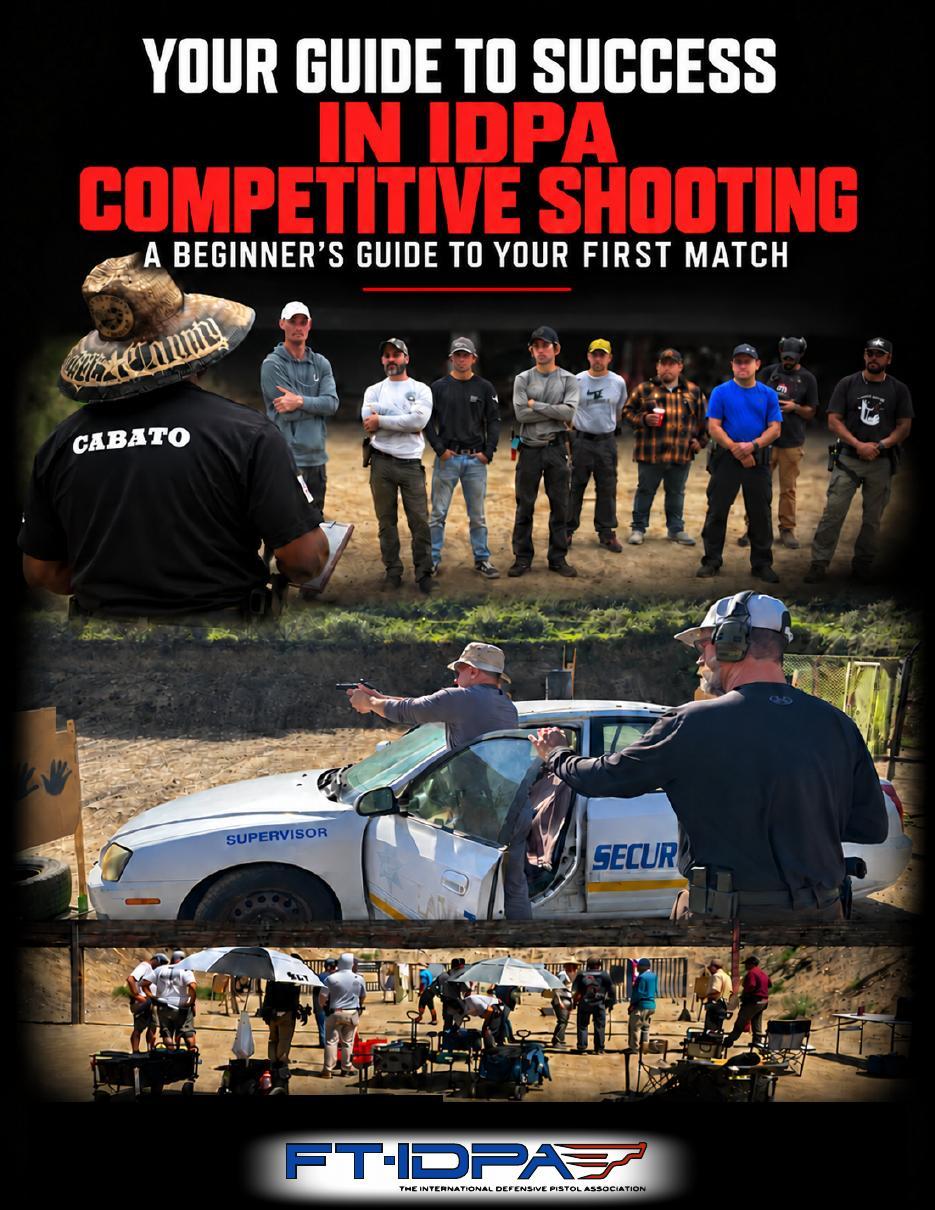
The New Shooter Guide

Thirteen pages. What IDPA is, how to find and pack for your first match, the four safety rules, the seven fundamentals, every range command you will hear, and a notes page for your first day. Written for the person who has never stood at a start position.

Cover of the FT-IDPA New Shooter Guide: Your Guide to Success in IDPA Competitive Shooting

Approved IDPA trainers

Train with people who shoot this match

Jeff Johnson

Experienced firearms instructor with a long history in competitive shooting. He began shooting at a young age and comes from a family of shooters, a foundation that shaped his expertise and competitive achievements. What sets Jeff apart is the breadth of his industry knowledge, from firearm safety and responsible ownership to the mechanics of different firearms and how they work with ammunition.

Text or email only
951-591-9186
jeff@fastactionteam.com

Fred Johnson

NRA pistol instructor, IDPA Chief Safety Officer, and Safety Officer Instructor. He has worked as SO and CSO and competed in more than 400 matches in the last 11 years, including Nationals and Worlds. He is also Match Director for his own club at Piru/CTA. His match experience as a high-level shooter and CSO gives him a unique perspective as an IDPA instructor.

Call or email
(949) 636-6981
Fljdd338@gmail.com

Paul Gee on YouTube

Short, focused videos packed with information, organized with a horizontal menu for easy reference. Look under Playlists to pick the category of training you want, then explore the other links for more IDPA-related fun. Highly recommended.

Watch the playlists
Bad shots build character. Great matches build legends. Keep training, keep shooting.

FT-IDPA Elite Training Team

Help build the next generation of FT-IDPA competitors

There is a moment every great coach looks forward to: a shooter who once struggled through every challenge ends up competing with confidence and finishes with a score they are proud of. You know how much work went into that moment because you are the coach who helped them get there.

That is what makes coaching at FT-IDPA rewarding. You help competitors work through setbacks, sharpen their stage planning, and watch practice pay off in better accuracy, faster times, and personal bests. For some, the big win is finishing their first match. For others, it is a goal they have chased all season. Both are worth celebrating.

If you are an experienced instructor who puts safety first and gets as excited about a student's breakthrough as your own, we would like to meet you. Contact Tony Como, FT-IDPA Match Director, to learn about the qualifications and how to apply.

Apply to the training team

Rule zero

Four rules of firearm safety

  1. 1.Treat every firearm as if it is loaded.
  2. 2.Always keep the muzzle pointed in a safe direction.
  3. 3.Keep your finger off the trigger until you are ready to shoot.
  4. 4.Know your target and what is around and beyond it.

Foundation

Seven fundamentals of marksmanship

  1. 1Stance
  2. 2Grip
  3. 3Holster Draw
  4. 4Sight Alignment / Sight Picture
  5. 5Breathing
  6. 6Trigger Control
  7. 7Follow Through

Range commands

Know what you will hear, and what to do

Starting the stage

  1. 1

    “Range Is Hot”

    The Safety Officer begins your course of fire. Check eye and ear protection.

  2. 2

    “Load and Make Ready”

    Under the SO's supervision, load, chamber, and carefully holster.

  3. 3

    “Are You Ready?”

    Take the starting position. Say "Yes" or nod. If not, say "Not Ready."

  4. 4

    “Standby”

    Hold the start position. The beep follows in 1–4 seconds.

  5. 5

    “Beep”

    The timer's start signal. Shoot the stage at a pace you can manage safely.

Ending the stage

  1. 1

    “If Finished, Unload and Show Clear”

    Muzzle downrange, remove the magazine, clear the chamber, show the SO.

  2. 2

    “If Clear, Slide Forward”

    Close the slide only when directed. Revolvers: close cylinder.

  3. 3

    “Pull the Trigger”

    Semi-autos only, on command, in a safe direction, to verify clear.

  4. 4

    “Holster”

    Slowly reholster with your finger outside the trigger guard.

  5. 5

    “Range Is Clear”

    Scoring and reset begin. Nobody moves downrange before this command.

Reference: 2026.2 IDPA Rulebook, Section 2.12. The Safety Officer and the stage briefing always govern.

Questions

Training questions we get

Is the new-shooter briefing required?
Yes. Every shooter attends the briefing before shooting their first FT-IDPA match. The Safety Officer covers the four safety rules, range commands, safe areas, and match procedure. Arrive early enough to attend it.
How do I book training?
Contact an approved trainer directly using the details on this page. Jeff Johnson takes text or email only. Fred Johnson takes calls and email. Tell them your experience level and what you want to work on.
Can I get a mentor for my first match?
Ask when you register and when you check in. We pair first-time competitors with an experienced shooter on their squad who walks them through each stage, from the walkthrough to taping targets.
What should I practice before match day?
Dry-fire the fundamentals: stance, grip, a clean holster draw from under a cover garment, sight picture, trigger control, and a safe reholster. Practice the unload-and-show-clear sequence until it is boring.